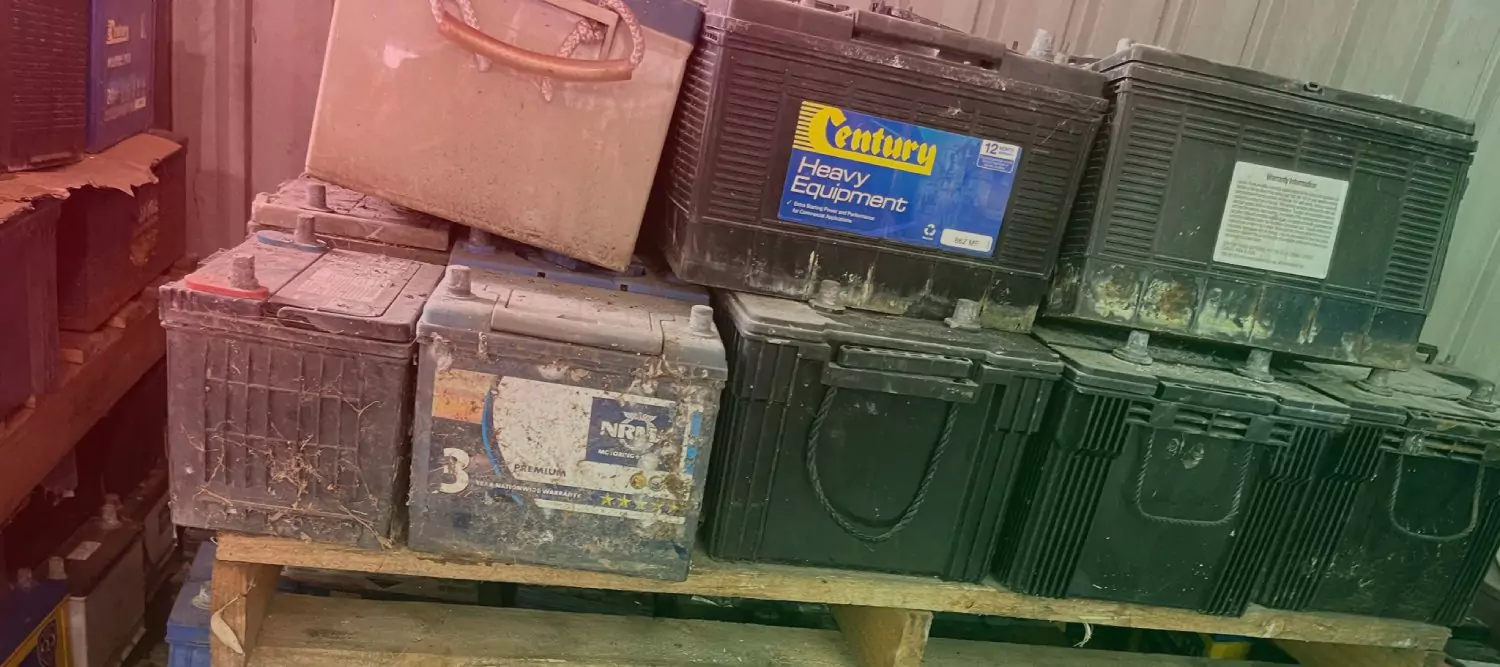
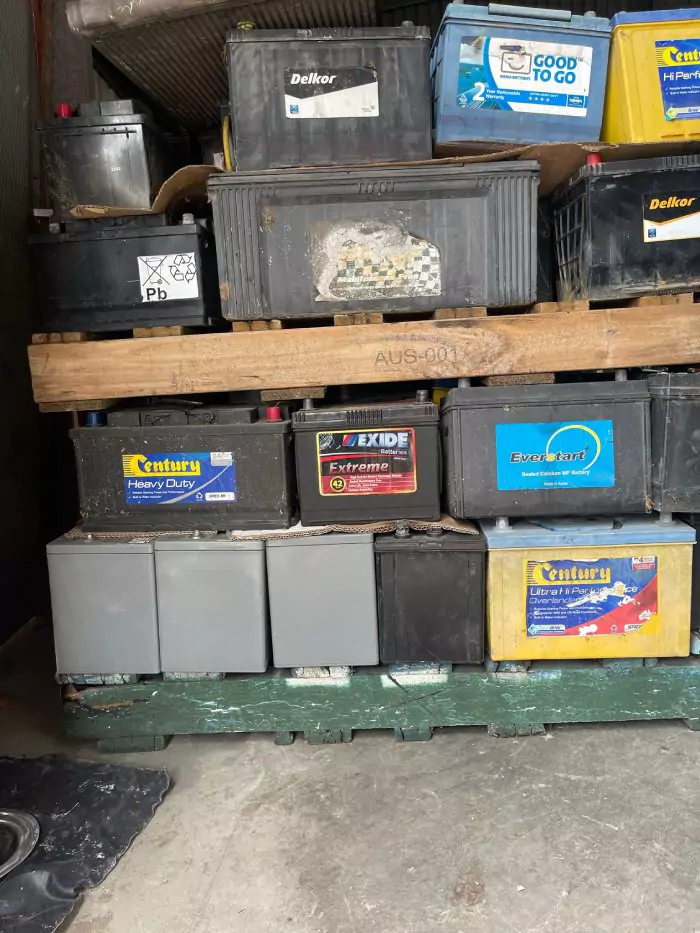
Old car battery in the shed, a stack of dead forklift batteries at work, or a boat battery that won't hold charge anymore. Hunter Scrap Metal collects and recycles lead-acid batteries across Newcastle and much of New South Wales, with free pickup, a phone quote first, and payment once it's weighed and checked.
Lead-acid batteries are one of the most recycled products around, with most of what's inside a battery able to go straight back into a new one. Here's what happens between pickup and the metal being reused.
Your batteries are picked up and sorted by type and size, since car, marine and industrial batteries are handled differently.
Trained staff drain and dismantle each battery, separating the lead plates, the plastic casing and the acid.
Lead goes off for smelting and reuse in new batteries, the casing is recycled as plastic, and the acid is neutralised or recovered.
Short answer, you describe what you've got, get a rough quote, then a pickup is arranged. Payment happens after the batteries are weighed and checked. For a workshop or fleet clearing out a stack of batteries at once, it's worth mentioning the volume upfront.
By phone, form or in person, with the type and roughly how many you've got.
Based on battery type, weight and current lead market rates. We may need to see them first for a firm number.
We collect from home, a workshop or a work site, or you can drop batteries off yourself.
Each battery is weighed and checked for damage or leaks before a final price is confirmed.
Payment happens on the spot once your batteries are checked.
Not sure if something counts? Describe it when you call. A damaged or leaking battery can usually still be collected, just let us know beforehand so it's handled the right way.
A lead-acid battery is made up of lead plates and sulfuric acid inside a plastic casing. Left in landfill, a cracked casing can let acid and lead leach into soil and groundwater, which is why NSW councils don't accept batteries in kerbside bins or general recycling. Lead-acid batteries are also one of the most recycled consumer products around, with the lead, plastic and acid inside almost all able to be recovered and reused rather than wasted.
If you're storing batteries before pickup, a few basics keep things safe. Keep them upright rather than on their side, away from open flame or heat sources, and out of reach of kids and pets. Don't try to open, puncture or drain a battery yourself. If one is already cracked or leaking, keep it away from bare skin and mention the damage when you book, so our team brings the right gear to handle it.
Sources: NSW EPA · NSW Legislation, Scrap Metal Industry Act 2016 & Regulation 2024
The type and weight of the battery, its condition, and current lead market rates.
Bigger isn't always better, but it usually helps. A truck, forklift or marine battery has more lead inside it than a standard car battery, so it's typically worth more per unit. Condition matters too, a battery that's intact and not leaking is easier and safer to process than one that's damaged.
Exact prices aren't listed here because lead prices move with global commodity markets, sometimes week to week. A dealer can only give a firm number once they know the type, condition and quantity of what you're bringing in, so it's worth calling for current pricing rather than relying on a figure from somewhere else.
Newcastle is home base, with real coverage across the Hunter Region, the Central Coast, and out to Muswellbrook, Taree, Forster, Port Macquarie, Tamworth and Armidale. Same-day service is available in Sydney and surrounding areas for larger jobs.
Bring your ID, and have payment details ready since cash isn't a legal payment method for scrap in NSW. If a battery is damaged or leaking, mention it upfront so the right gear turns up on the day.
Car batteries, truck and 4WD batteries, marine batteries, forklift and industrial batteries, and general lead-acid scrap. Not sure what you've got? Describe it when you call and we'll let you know.
Lead-acid batteries contain lead and sulfuric acid, both of which can leak into soil and waterways if a casing cracks in landfill. NSW councils don't accept batteries in general waste or kerbside recycling, which is why a licensed collector needs to take them.
Yes. Pickup is part of the standard service across Newcastle and the Hunter Region. For a handful of car batteries, a drop-off at the yard also works if that suits you better.
Yes, if a few basics are followed. Keep batteries upright, away from heat, and don't puncture or crack the casing. If a battery is already leaking or damaged, mention that when you call so it's handled correctly on collection.
No. Under the Scrap Metal Industry Act 2016 and the Scrap Metal Industry Regulation 2024, registered dealers in NSW can't pay cash for scrap metal, and that includes batteries. Payment has to be traceable, so you'll usually give bank details.
The type of battery, its weight, its condition, and current lead market rates. A large truck or forklift battery is worth more than a small car battery simply because there's more lead inside it.
Newcastle is home base, with coverage across the Hunter Region, the Central Coast, and out to Muswellbrook, Taree, Forster, Port Macquarie, Tamworth and Armidale.
It's drained and dismantled by trained staff. The lead plates go off for smelting and reuse, the plastic casing is recycled separately, and the acid is neutralised or recovered rather than dumped.
Hunter Scrap Metal
Read the original customer reviews directly on our Google Business profile.
Thank you. Your quote form has been sent.